Bible Trivia and Word Games
AppgenerationWord
4.9363.00 Reviews
- Version
- 1.8.0
- Installs
- 100.00K
- Age Rating
- Everyone
Screenshots
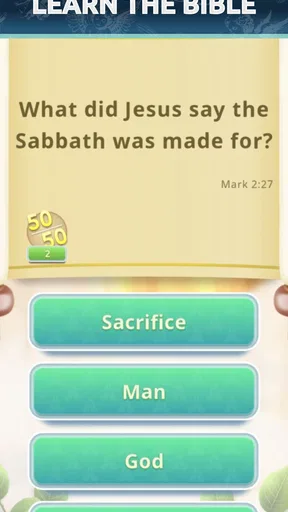
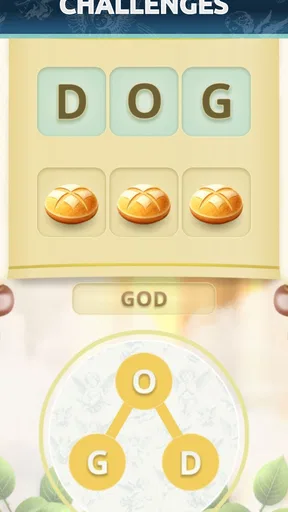

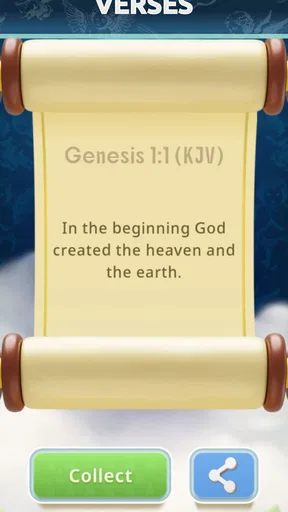
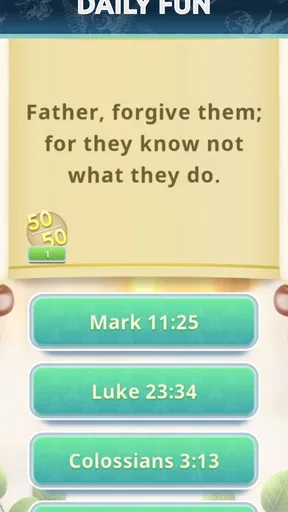
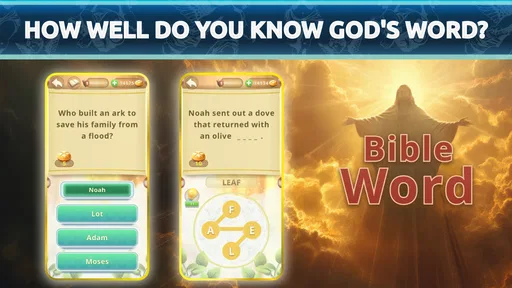
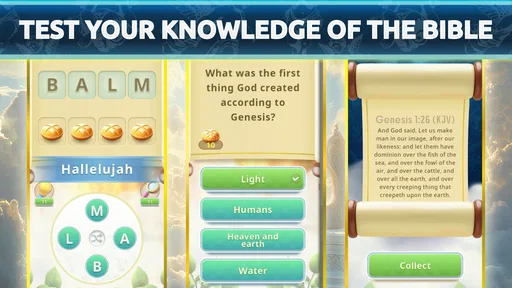
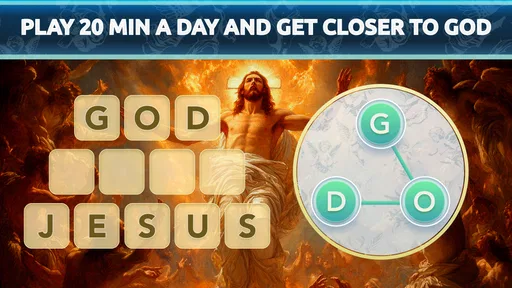
Our Review of Bible Trivia and Word Games
 Analysis by Appyee
I approached Bible Trivia as a word game first and a Bible-learning tool second. That distinction matters. It is designed for short bursts of play, quick recall, and the satisfying moment when a familiar passage or name comes back to you. The idea is simple enough for casual use, but the subject gives each question more weight than an ordinary general-knowledge quiz.
After spending time with it, I found the strongest appeal is its focused theme. Instead of jumping between science, celebrities, geography, and random facts, the game keeps attention on biblical knowledge and word-based challenges. That makes it easier to recommend to someone who wants a light daily activity connected to personal study, family conversation, or church-related learning rather than another completely unrelated mobile distraction.
How Bible Trivia fits into everyday play
The game comes from Appgeneration and sits in the word category, with a free entry point and an Everyone age rating. Its store summary presents it as a way to learn more about the Bible through word and quiz play, and that description matches the experience better than calling it a conventional puzzle game. The main value is not complex controls or a large action system; it is the combination of recognition, memory, and curiosity.
I can easily see myself opening it while waiting for an appointment, taking a few questions during a break, or using it as a relaxed activity after reading a passage. It does not demand the kind of uninterrupted attention that a long-form study session requires. At the same time, it is more purposeful than scrolling through a generic trivia feed because the questions point toward one subject area.
That focused design also creates its first important trade-off. If you already know the Bible well, some questions may feel like comfortable recall rather than serious testing. If you are new to the subject, the same questions can be a useful invitation to look up names, events, and vocabulary afterward. I would treat the game as a prompt for further learning, not as a substitute for reading the source material itself.
The app has reached over a hundred thousand installs and holds a 4.9 average from around seven thousand ratings, which suggests that its basic concept is connecting with a substantial audience. Those figures are encouraging, but they do not tell me whether the difficulty suits every player. A high rating can confirm that many people enjoy the experience; it cannot replace trying the questions yourself and deciding whether the level feels rewarding.
What the free starting point means for players
There is no purchase price to begin, which removes the biggest barrier for someone who is curious but undecided. I would install it without feeling that I had committed money before understanding the question style or the balance between learning and entertainment. That is especially useful for parents, teachers, and families who want to inspect the tone before recommending it to younger players.
The app does include in-app purchases ranging from $0.99 to $22.99 per item. That is the part I would discuss openly before handing the device to a child. The existence of optional items does not automatically make the game unfair, but it does mean spending should be treated as a separate decision from downloading. I would keep purchases under the account holder’s control and decide in advance whether the free experience is enough.
One practical habit helps here: play several sessions before considering any paid item. First notice whether you are enjoying the questions, whether you are learning anything, and whether progress feels satisfying without spending. If the free portion already meets your needs, there is no reason to buy simply because an option is visible. If you do spend, do it for a clearly understood benefit rather than because a difficult question creates pressure.
I also would not assume that a purchase makes a player more knowledgeable. The educational value comes from thinking about the answer and following up on unfamiliar material. Paying may change access or convenience, but it cannot replace that active step. For me, the fairest way to use this game is to regard purchases as optional support, never as a shortcut to confidence.
Progress feels better when you slow down
Word and quiz games naturally encourage fast answers, yet Bible questions often reward careful reading. A name can resemble another name, a place can be confused with an event, and a familiar phrase can trigger an answer before I have considered the wording. My best sessions came when I treated each question as a small reading exercise instead of racing through it.
A useful routine is to separate mistakes into three groups: facts I had forgotten, facts I had confused, and facts I had never learned. Those categories lead to different follow-up actions. Forgotten information benefits from repetition, confused information benefits from comparing passages or names, and unfamiliar information deserves a short reading session. This turns a wrong answer into a practical study plan rather than a simple loss.
I would also avoid measuring progress only by a streak or a perfect run. A player who answers easy questions quickly may look successful while learning very little. Another player may miss more often but discover important gaps. Because this is a themed game, improvement should mean recognizing more context over time, not merely tapping the correct option faster.
For a family, the game can work particularly well as a conversation starter. One person can answer, another can explain why, and everyone can check the passage afterward. That approach reduces the pressure of being right in isolation and makes the activity useful even when the players have different levels of knowledge. It also prevents the quiz format from becoming a test of who already knows the most.
Where the pressure can become uncomfortable
Any quiz can create a small emotional spike when an answer is wrong. With Bible material, that reaction may be stronger because the subject is meaningful to many players. I think the healthiest approach is to keep the game in its proper place: it is a learning activity, not a measure of faith, character, or personal worth.
That perspective matters when playing with children. I would praise careful reasoning and curiosity rather than celebrate only correct answers. If a child asks why an answer is correct, pause the game and investigate together. The question may be more valuable than the point. This is one reason I would prefer using the app alongside a Bible, discussion, or lesson instead of leaving it to carry the entire educational experience.
Adults can benefit from the same restraint. A difficult round may expose gaps in memory, but that is not a defect in the player. The useful response is to note the topic and return to it later. When I use a quiz this way, the pressure becomes a signal about what to revisit rather than a reason to chase perfect results.
Is the experience fair for competitive players?
Bible Trivia is easier to judge fairly as a personal knowledge game than as a serious competitive platform. Players enter with very different backgrounds, translations, teaching traditions, and levels of exposure to the subject. A score can show who recognized more answers in a session, but it does not necessarily show who understands the material more deeply.
That makes it a good fit for friendly competition with clear expectations. Two people can compare results for fun, challenge each other, and then discuss the questions they missed. I would be cautious about presenting the outcome as an authoritative ranking, especially when one player has spent years studying the Bible and another is encountering the material for the first time.
Spending is another fairness question. Since the game is free to download and offers purchases from $0.99 to $22.99 per item, I would agree on the rules before competing. The cleanest arrangement is for everyone to use the same free access, or for competition to be based on discussion rather than scores. If one player has access to something another does not, a result may reflect access differences as much as knowledge.
I would not call the game pay-to-win based only on the presence of purchases. There is not enough confirmed detail here to make that claim, and it would be unfair to invent a conclusion. What I can say is that competitive players should inspect how their chosen mode works in practice and avoid treating purchased access as proof of skill. For casual rivalry, shared rules and good humor matter more than a leaderboard.
Compared with a general trivia app, this game has a narrower field and therefore a more consistent identity. A general quiz offers broader variety and may be better for someone who wants constant subject changes. A Bible study app or reading plan, on the other hand, is likely the better choice for structured lessons, sustained reading, or detailed references. I would choose this game when I want active recall in a short format, not when I need a complete study system.
Questions I would consider before installing
The first question is whether it works for beginners. In my view, yes, provided the player is comfortable learning through mistakes. The theme gives beginners a clear direction, and unfamiliar answers can point toward useful reading. Someone who expects every question to be explained in depth may need a separate study resource beside it.
The second question is whether it is suitable for children. The Everyone rating makes it broadly appropriate from a content perspective, but age suitability is not the same as supervision needs. I would still manage purchases, explain that wrong answers are normal, and help younger players distinguish a quiz result from a complete understanding of a passage.
The third question is whether it can replace Bible reading. I would say no. It can refresh memory, introduce terms, and encourage discussion, but a quiz naturally reduces a large text to selected prompts. For context, interpretation, and continuity, I would read the relevant material separately. The strongest workflow is quiz first, then follow-up reading on anything surprising or unfamiliar.
The fourth question is whether it is worth paying for. My answer depends on how much the free version supports your routine and what each optional item actually adds when you encounter it. Because individual purchases span from $0.99 to $22.99, I would not make a blanket recommendation to buy. Start free, identify a specific limitation, and only then decide whether the cost feels justified.
The fifth question is whether it needs an internet connection or stores progress in a particular way. Those details are important to some users, especially people who travel or share devices, but I would check the current app behavior and device settings directly before relying on it in those situations. I would not promise offline play or cross-device continuity without seeing those functions clearly in use.
Small habits that make the game more useful
My favorite improvement is to keep a short “missed questions” note outside the game. I would write down only the topic, not every detail, and review the list once a week. This prevents random mistakes from disappearing and gives the next session a purpose. It also reveals whether the difficulty comes from names, chronology, vocabulary, or broader context.
Another good method is the two-pass session. On the first pass, answer naturally without looking anything up. On the second, revisit the questions that caused hesitation and read the related passage or reference. This preserves the game’s challenge while adding the context that a quick quiz cannot provide on its own.
For group play, I would ask each person to explain one answer rather than simply announce a score. That changes the activity from a speed contest into shared learning. It is especially helpful when players come from different backgrounds, because explanations expose assumptions and create room for respectful comparison.
I would also set a stopping point. A short session is more likely to remain enjoyable than an extended attempt to repair every mistake immediately. Once attention drops, answers become guesses and the educational value falls. Ending with one question to investigate later keeps the game connected to real learning instead of turning it into repetitive tapping.
My trust verdict after weighing the trade-offs
The app’s strongest case is its clarity of purpose. It offers a free way to engage with Bible-themed word and quiz play, and its high average rating from thousands of players shows that the format has found an audience. The release date of Jun 18, 2025 and current version 1.8.0 also give the product a relatively recent profile, while the minimum operating-system requirement is version 10, making it relevant to compatible Android or iOS devices.
Still, I would keep expectations realistic. This is not the right choice for someone seeking a full study library, detailed commentary, or broad trivia variety. It may also disappoint players who need transparent competitive rules, extensive explanations, or a completely purchase-free environment. The free download is inviting, but the optional spending range means families and competitive groups should establish boundaries before play.
My recommendation is strongest for casual learners, families, study groups, and Bible readers who enjoy testing memory in small sessions. I would install it, play without spending first, and use incorrect answers as prompts for further reading. That workflow respects both the game and the subject.
The fairest way to enjoy Bible Trivia is to treat it as a doorway to learning, not a final authority. Used that way, it delivers a focused and approachable word-game experience with genuine everyday value. I would recommend it to a friend who wants Bible-themed practice in a relaxed format, while steering serious students toward pairing it with a more complete reading or study resource.
Verdict
Strengths of Bible Trivia and Word Games
- Covers Bible facts from both the Old and New Testaments.
- Short rounds make it easy to play during quick breaks.
- Word puzzles offer a change of pace from standard trivia questions.
- Helpful for testing memory of biblical names, places, and events.
- Suitable for solo play without needing an internet connection in every mode.
Limitations of Bible Trivia and Word Games
- Some questions may depend on a specific Bible translation.
- Repeated puzzles can reduce the challenge for frequent players.
- Limited appeal for users who are not interested in biblical topics.
- A few answers may feel ambiguous without additional context.
- Ads may interrupt gameplay, especially between completed rounds.
Other Releases by Appgeneration
View All
Mahjong for Seniors
Board4.6

Trivia Game - IQ Quiz Test
Trivia4.6
Similar Picks in This Category
View All
Word Search - Word Puzzle Game
Bluetile4.8

Word Search Quest - Puzzles
Blackout Lab4.8

CodyCross: Crossword Puzzles
Fanatee, Inc.4.7

Words of Wonders: Crossword
Fugo Games4.9

Wordscapes: Word puzzle game
PeopleFun4.7

Word Search Explorer
PlaySimple Games4.9
Frequently Asked Questions
What is Bible Trivia and Word Games?
Bible Trivia and Word Games is a faith-based mobile game that combines Bible knowledge quizzes with word challenges. Players can answer questions about biblical characters, events, books, and teachings while also completing puzzles designed around Scripture-related vocabulary. It is intended for casual entertainment, learning, and personal reflection, making it suitable for users who enjoy both religious content and simple quiz gameplay.
Is Bible Trivia and Word Games suitable for beginners or people with limited Bible knowledge?
Yes, the game is generally suitable for beginners as well as experienced Bible readers. The questions may range from basic facts to more challenging details, so new players can learn while progressing. Some answers may depend on familiarity with specific books or stories, but the word games and accessible format make it easy to start without advanced theological knowledge. Difficulty can vary between different challenges.
Does Bible Trivia and Word Games require an internet connection?
Some features may work offline, particularly previously loaded trivia questions or basic word puzzles, but online access can be necessary for downloading the app, receiving updates, displaying advertisements, synchronizing progress, or accessing additional content. Availability may depend on the version installed and the device being used. It is best to check the app’s current store description before relying on it without an internet connection.
Is Bible Trivia and Word Games free to download and play?
The game may be available as a free download, although free versions can include advertising, optional purchases, or limitations on certain content and features. Users should review the Google Play Store or Apple App Store listing for the latest pricing information before installing it. If the app offers in-app purchases, parents should also check device payment settings to prevent accidental purchases during gameplay.
What can I expect from the gameplay and learning experience?
Players can expect short, casual sessions focused on answering Bible-related questions and solving word puzzles. The game can help reinforce names, stories, terminology, and general biblical knowledge, but it should not be treated as a replacement for reading the Bible or consulting reliable study resources. Question wording and interpretations may vary, so users who want deeper context should verify answers with a trusted Bible translation or study guide.
Play our best games!


